What to Expect on a North Shore Surf Lesson
If you’re planning surf lessons on Oahu and thinking about surfing North Shore, it’s normal to have questions. From ocean conditions to how the lesson actually works, knowing what to expect helps you show up relaxed and ready to learn. This guide explains exactly what to expect on a North Shore surf lesson, especially if it’s your first time surfing here. North Shore surf lessons are designed for beginners and intermediate surfers, even during the winter months. Lessons take place at protected, beginner‑friendly breaks that are carefully chosen based on daily ocean conditions.
Table of Contents
- Arrival and check-in for a North Shore surf lesson
- Land lesson and safety briefing for beginners surfing the North Shore
- Getting in the water and catching your first waves on the North Shore
- How long a North Shore surf lesson lasts
- What to bring to your North Shore surf lesson
- What happens after a surf lesson on the North Shore
Arrival and check‑in for a North Shore surf lesson
Your surf lesson usually starts with a quick check‑in at the parking area. Your instructor will greet you, confirm your booking, and get you fitted with a surfboard and rash guard if needed. This is also when you’ll talk briefly about ocean conditions, your swimming comfort level, and any prior surfing experience.
North Shore surf schools typically teach at two main locations, based on ocean conditions. Beginner surf lessons often take place at sheltered spots like Chun’s Reef during summer or Puaʻena Point during winter, where waves are more gentle and predictable.
If I’ve surfed in California, will Chun’s Reef or Puaʻena Point feel too small?
Not necessarily. These breaks may look mellow, but they’re excellent for refining technique, timing, and positioning. Even surfers with prior experience often appreciate starting here to adjust to Hawaiian waves and local conditions.
What if the surf forecast looks too small or too big?
Surf forecasts can be confusing if you’re not familiar with North Shore conditions. Swell size on a forecast does not always reflect what surf spots will actually feel like. Beginner locations like Chun’s Reef and Puaʻena Point are usually well‑suited for learning and not intimidating. If conditions are not appropriate for beginners, lessons are adjusted or moved accordingly.Do I need to eat breakfast before the lesson?
Yes, it’s recommended to eat a light meal or snack before your surf lesson. Surfing uses a lot of energy, and having food in your system helps prevent lightheadedness or fatigue. Avoid very heavy meals right before the lesson.
Land lesson and safety briefing for beginners surfing the North Shore
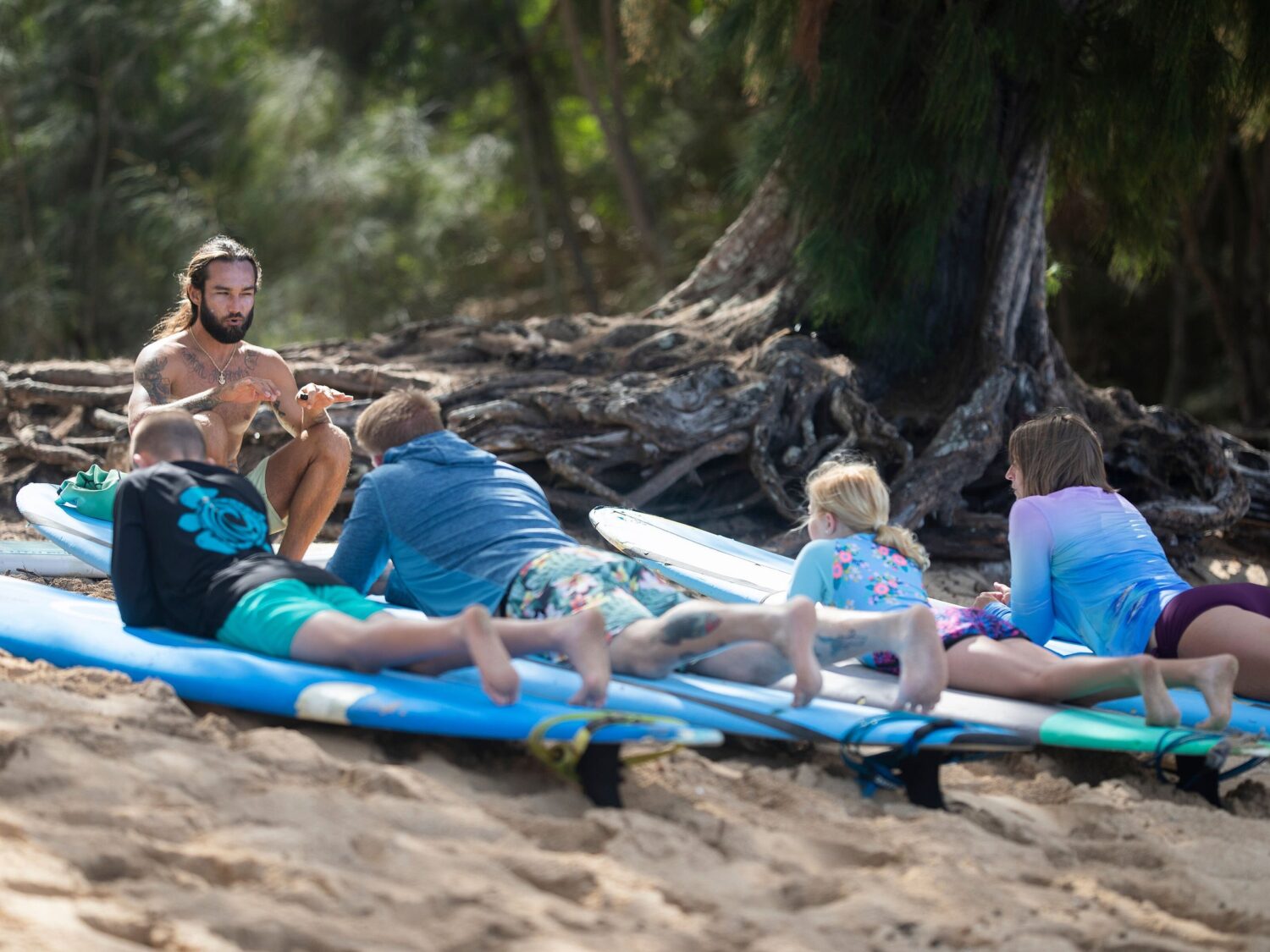
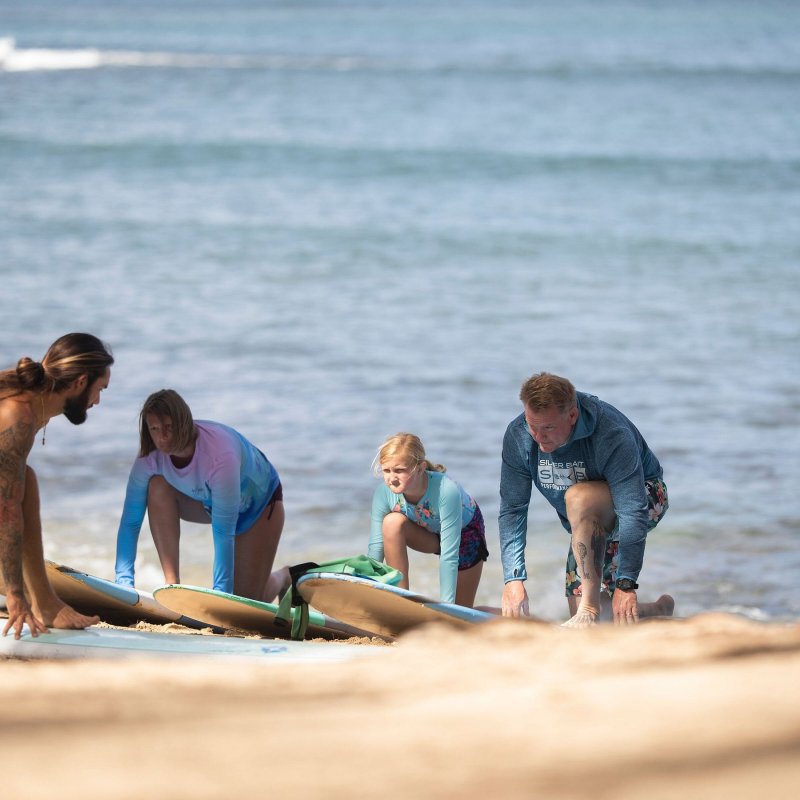
Before entering the water, you’ll have a short land lesson. This part is fun, easy to follow, and focused on safety and confidence. You can expect to learn:
- Basic ocean awareness and surf safety rules
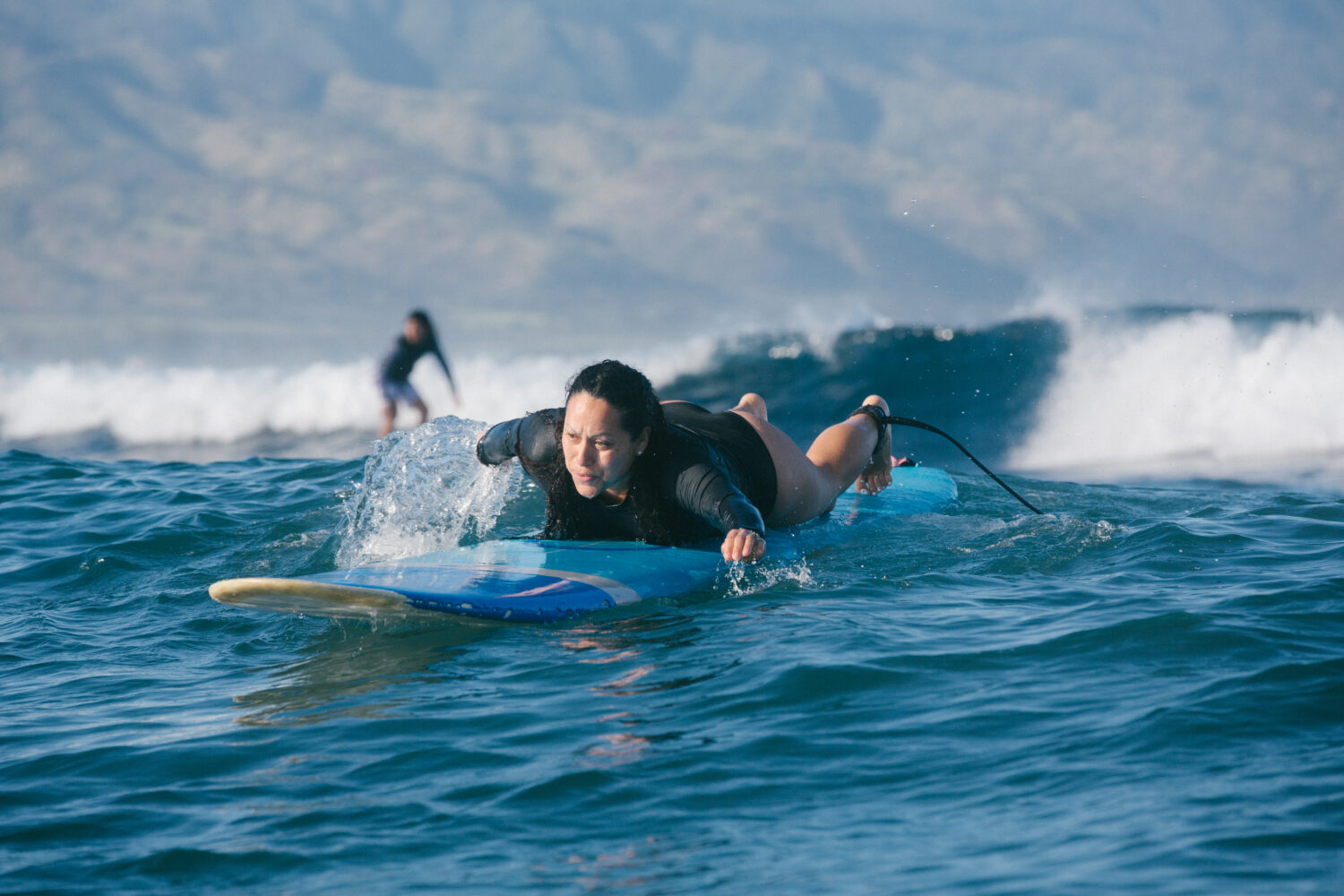
- How to lie on the board and paddle correctly
- How to pop up and stand on the surfboard
- Where to sit and how to enter the water safely
This step is especially important for first‑time surfers and helps you feel comfortable before getting into the ocean.
What if I can’t swim?
Basic comfort in the water is helpful, but you don’t need to be a strong swimmer. Lessons take place in controlled areas, and instructors stay close at all times. Life vests are available upon request.
Am I a good fit for a surf lesson?
If you’re open to learning and willing to try, you’re a great fit. Surf lessons are paced for beginners and adapted to different comfort and ability levels.
Am I too old to surf?
Absolutely not. Surf lessons are available for a wide range of ages, and instructors adjust the pace and goals to suit each student.
Getting in the water and catching your first waves on the North Shore
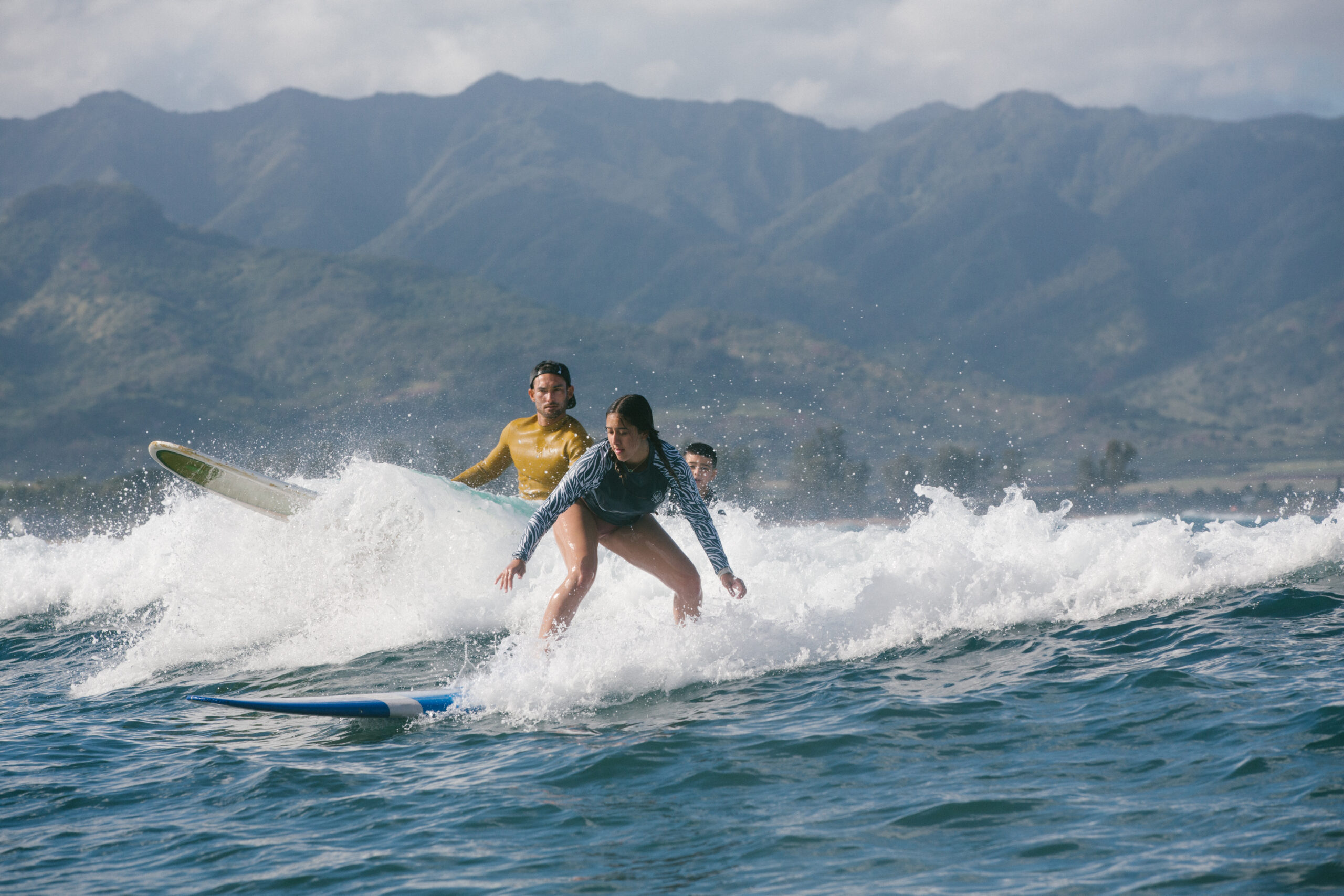
Once you’re ready, your instructor will guide you into the water and stay close the entire time. North Shore surf lessons are hands‑on, with instructors helping position your board, giving clear cues, and offering encouragement throughout the session.
Instructors at North Shore Ohana School of Surfing are not only experienced surfers, but dedicated teachers who are passionate about helping beginners succeed.
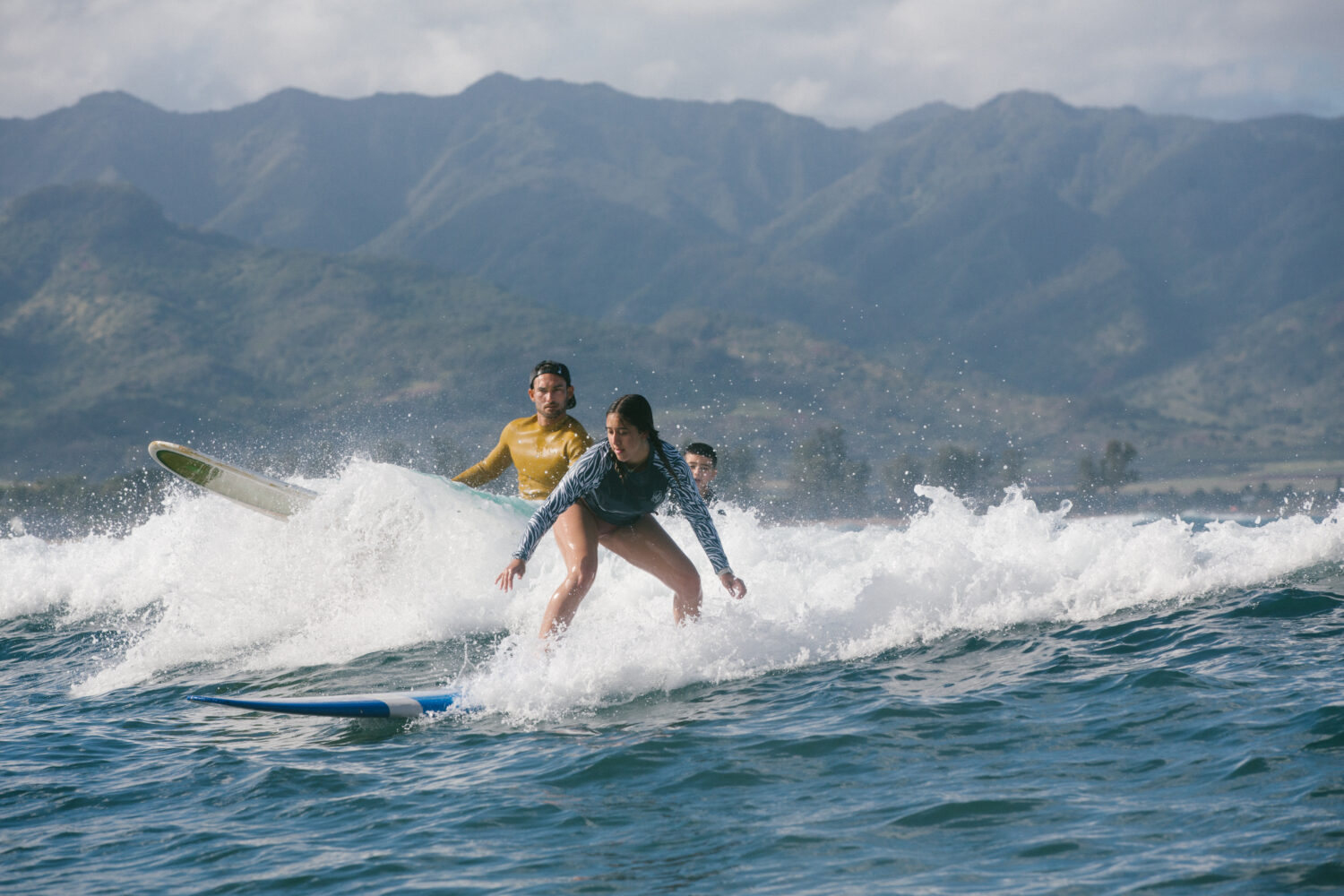
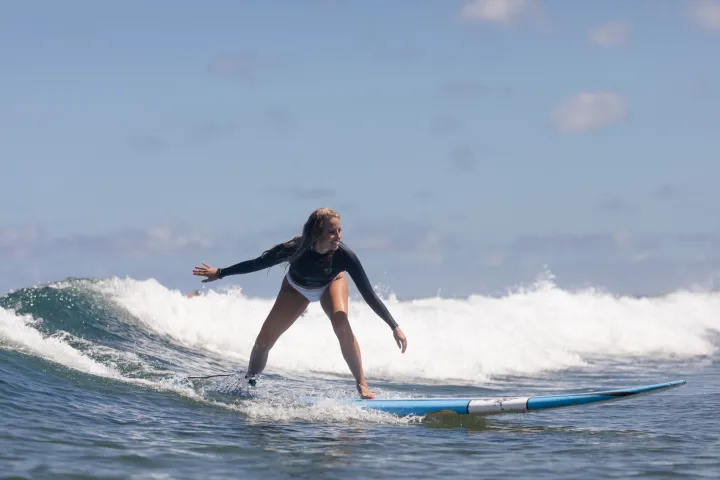
With the right instruction and guidance, most beginners start catching waves during their very first lesson. Many students are surprised at how quickly they’re able to stand up, often during the first lesson.
With private surf lessons and a proper ratio of one instructor per three surfers, instructors are able to focus on personalized coaching. You’ll receive feedback after each wave, along with tips on improving balance, stance, and paddling.
What if I fall?
Falling is a normal part of learning to surf and usually happens in calmer conditions. Instructors teach you how to fall safely away from the board and will help you get right back into position. Each fall builds confidence and understanding of balance and timing.
Will I see turtles?
Sea turtles are common on the North Shore, especially near reef areas like Chun’s Reef. While sightings can’t be guaranteed, about nine times out of ten students see turtles swimming nearby during lessons.How deep is the water during surf lessons?
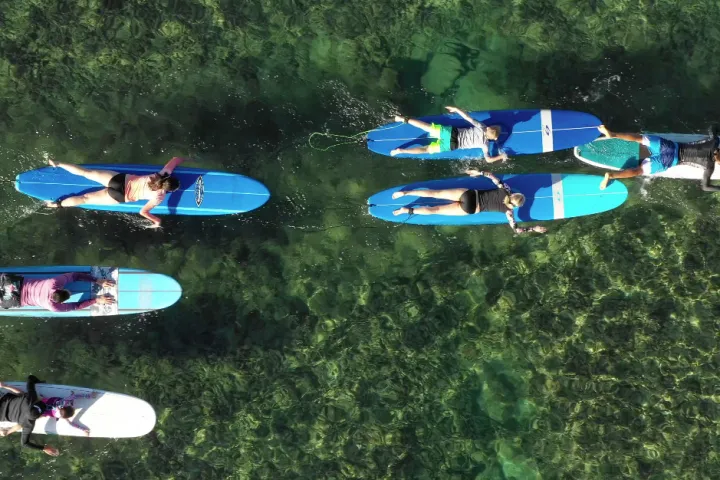
Beginner surf lessons take place in water that is not deep blue or open‑ocean deep, and in clear conditions you can usually see the bottom.
How long a North Shore surf lesson lasts
Most North Shore surf lessons last about 1.5 to 2 hours. The pace is adjusted to your comfort level, with breaks when needed. The goal is not just standing up, but feeling safe, confident, and excited to surf again.
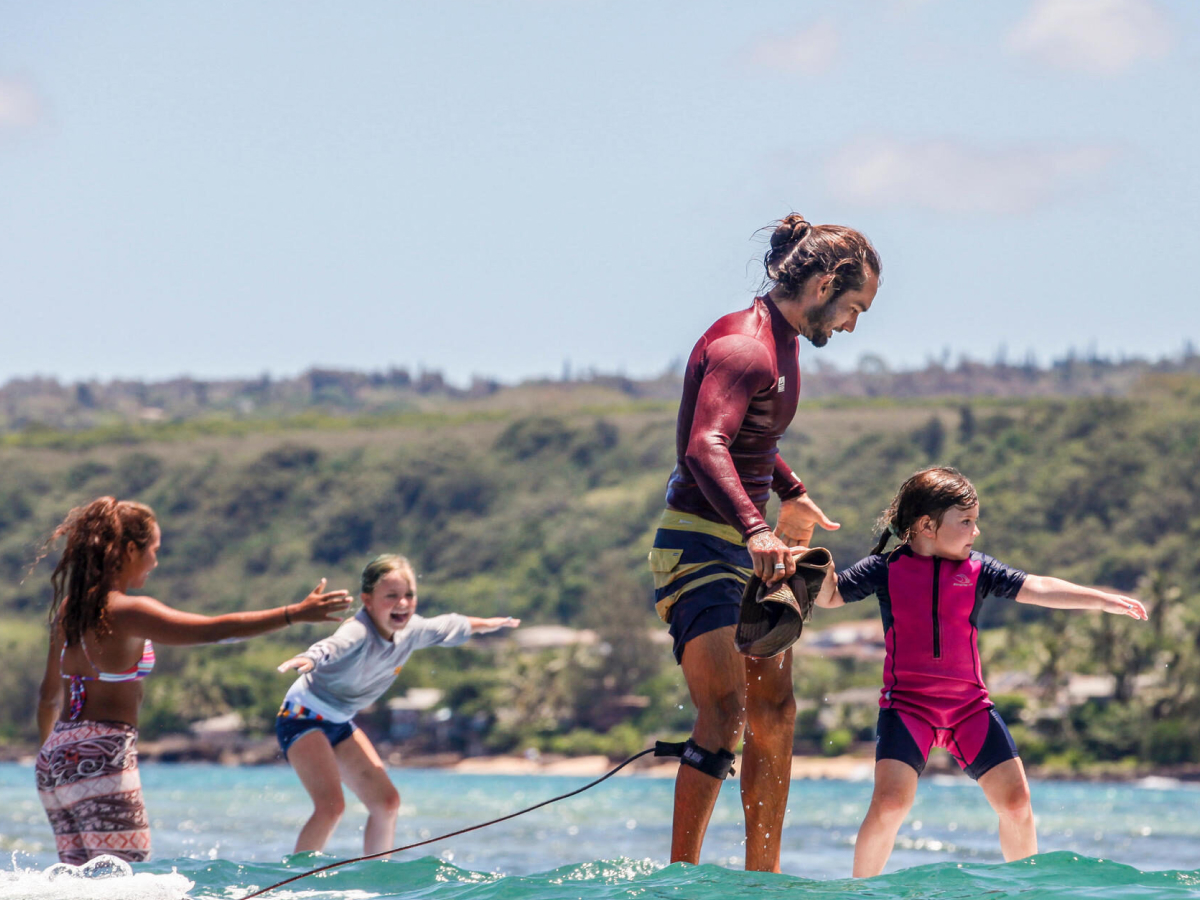
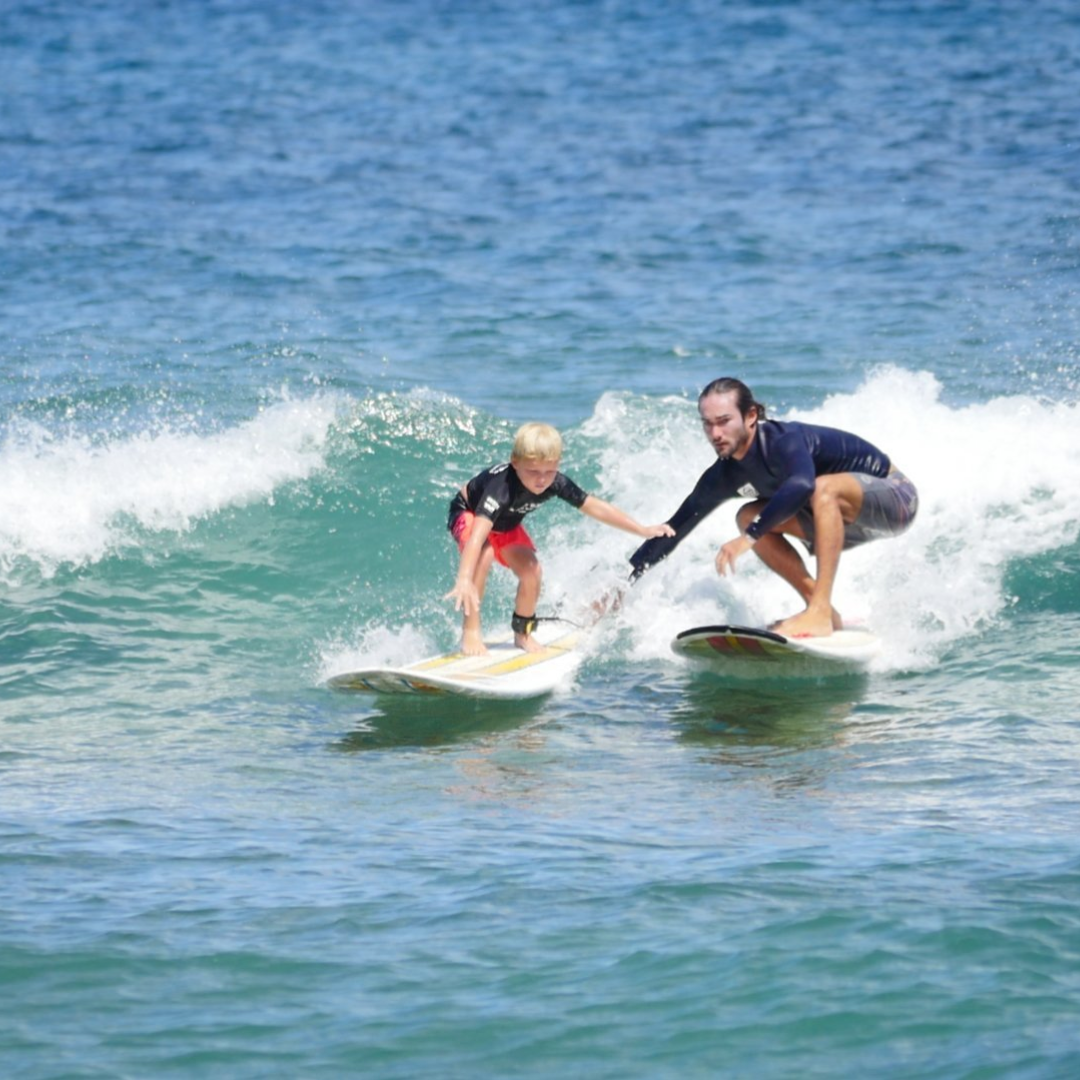
Is two hours surf lesson too much for a five‑year‑old?
Lessons for young kids are flexible. Instructors watch energy levels closely and adjust the pace, take breaks, or shorten water time as needed to keep the experience fun and safe.
What to bring to your North Shore surf lesson
Let’s start with what’s included in your lesson:
- Surfboard and leash
- Rash guard
- Life vest available upon request
To keep your surf lesson simple and stress‑free, plan to bring:
- Swimsuit
- Towel
- Reef‑safe sunscreen. Some people also prefer wearing leggings for extra sun protection.
- Water and a light snack, such as a granola or energy bar.
- A positive attitude
Do I need a wetsuit, or what if my child gets cold easily?
Wetsuits usually aren’t necessary in Hawaii, but kids or adults who tend to get cold can wear extra layers like rash guards or leggings. Let your instructor know if warmth is a concern.
What happens after a surf lesson on the North Shore
After the lesson, your instructor will help you carry your board back and answer any final questions. Many students leave with a big smile, sandy feet, and a new appreciation for surfing.
Many students say their surf lesson becomes one of the highlights of their Hawaii trip. If you’re visiting Haleʻiwa, it’s easy to turn your lesson into a full North Shore day, with nearby food spots, beaches, and local shops just minutes away.
Ready to book North Shore surf lessons?
If you’re ready to learn to surf in Hawaii, North Shore surf lessons offer a supportive, beginner‑friendly experience in one of the most iconic surf regions in the world. With the right location, experienced instructors, and a relaxed pace, your first surf lesson can be both fun and memorable.